Not all states are equal when it comes to vehicle transport from auctions. Some regions consistently cause longer waiting times, slower deliveries, and more complex logistics.
For buyers and small dealers, knowing which states tend to create delays helps set realistic expectations and plan more effectively.
Why Some States Cause More Delays
Transport delays are rarely random.
They are usually caused by a combination of:
- High demand
- Regulatory complexity
- Traffic congestion
- Limited carrier availability
When several of these factors overlap, delays become more likely.
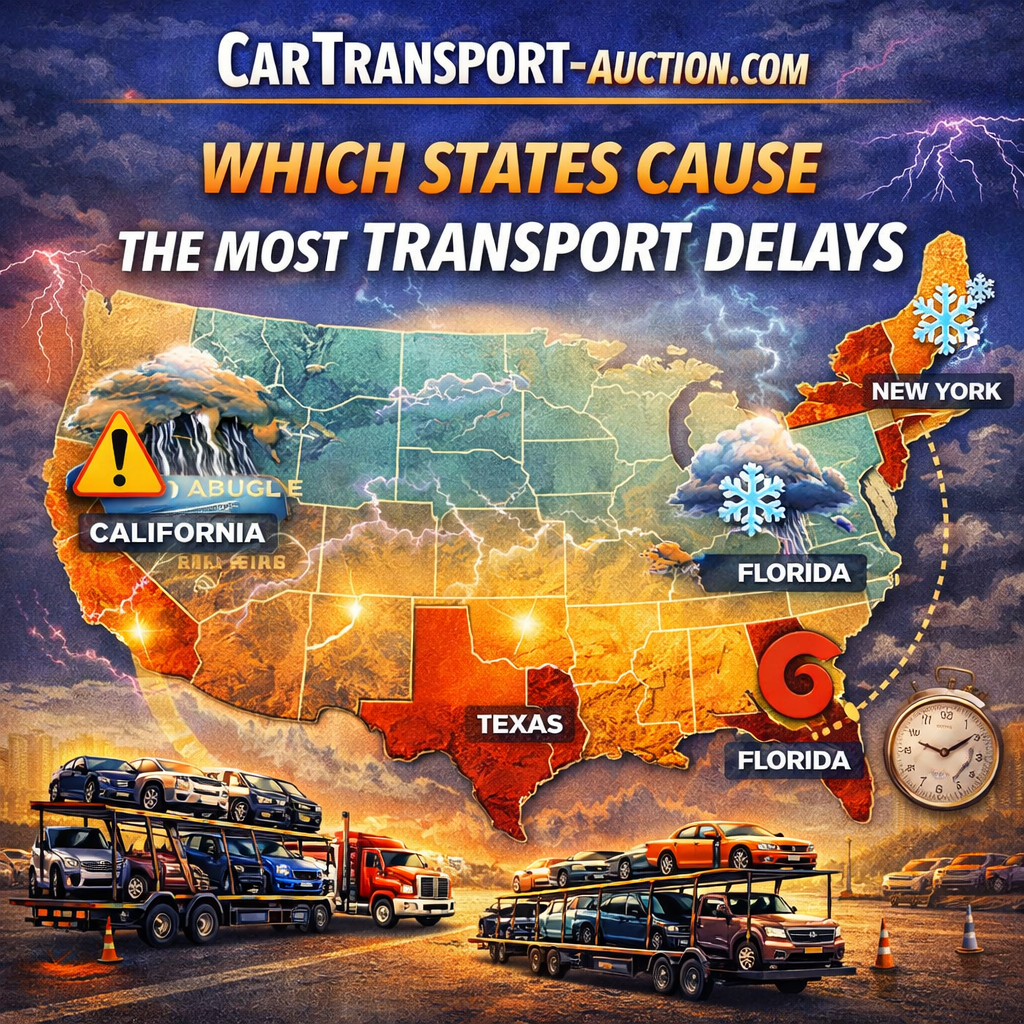
California – High Volume And Strict Regulations
California is one of the busiest states for auction activity.
Key challenges:
- High vehicle volume
- Strict compliance requirements
- Heavy traffic in major cities
Carriers often face:
- Longer wait times at auction yards
- Slower delivery in urban areas
Despite strong infrastructure, demand creates bottlenecks.
New York – Urban Restrictions And Access Issues
New York presents a different type of challenge.
Common issues:
- Tight city access rules
- Limited truck entry zones
- Dense traffic
In many cases:
- Delivery cannot be completed door-to-door
- Additional coordination is required
This increases both time and cost.
Florida – Demand Peaks And Congestion
Florida has consistent demand, especially in auction shipping.
Factors include:
- High dealer activity
- Seasonal volume spikes
- Congested routes
During peak periods:
- Dispatch takes longer
- Delivery timelines become less predictable
Texas – Distance And Route Complexity
Texas is large, and that alone creates challenges.
Key factors:
- Long distances within the state
- Variable route density
- Uneven carrier distribution
Even within one state, delivery times can vary significantly.
Northeast Region – Density And Regulations
States in the Northeast share similar characteristics.
Challenges:
- High population density
- Strict local rules
- Limited truck access
This includes states like:
- New Jersey
- Massachusetts
- Connecticut
Together, they form one of the most complex transport regions.
Remote And Low Density States
Delays are not only caused by busy areas.
Low-density states can also slow things down.
Reasons:
- Fewer carriers
- Less frequent routes
- Longer detours
These areas may require additional time for dispatch and delivery.
How Delays Affect The Shipping Process
State-related delays impact multiple stages.
They can affect:
- Dispatch timing
- Pickup scheduling
- Transit duration
- Final delivery
A delay in one stage often affects the entire process.
How To Reduce Delay Risks
While you cannot avoid all delays, you can minimize them.
Best practices:
- Use realistic pricing to attract carriers faster
- Plan for extra time in high-risk states
- Stay flexible with delivery options
- Work with experienced dispatchers
Preparation makes a significant difference.
How State Delays Connect To The Bigger Picture
State-specific challenges are part of a larger system.
They interact with:
- Carrier dispatch
- Market demand
- Location accessibility
Understanding how these factors combine helps explain why shipping timelines vary so much.
Final Thoughts
Some states consistently create more transport delays due to demand, regulations, and infrastructure challenges.
Recognizing these patterns allows buyers and dealers to better plan shipments, reduce frustration, and improve overall logistics efficiency.
In auction vehicle transport, location is not just a detail – it is a major factor in how fast your vehicle moves.