Damage during vehicle transport from auctions does not happen often, but when it does, knowing how to handle it correctly is critical.
Filing a damage claim is a structured process, and success depends on documentation, timing, and accuracy. Many claims get denied not because the damage is invalid, but because the process was handled incorrectly.
When A Damage Claim Is Necessary
A claim should be filed when:
- New damage appears after delivery
- The damage was not recorded at pickup
- The issue occurred during transport
The key factor is proving that the damage happened between pickup and delivery.
The Role Of Documentation
Documentation is the foundation of any claim.
The most important document is the Bill of Lading.
It shows:
- Vehicle condition at pickup
- Condition at delivery
- Any differences between the two
Without proper documentation, claims are very difficult to win.
Step 1 Inspect The Vehicle At Delivery
The process starts at delivery.
You must:
- Inspect the vehicle carefully
- Compare it with the recorded condition
- Look for any new damage
This step cannot be skipped or rushed.
Step 2 Record Damage Immediately
If damage is found:
- It must be noted on the Bill of Lading
- The driver must acknowledge it
- Both parties should sign
If damage is not recorded at delivery, it is usually considered pre-existing.
Step 3 Take Photos And Evidence
Visual proof strengthens your claim.
Recommended:
- Take clear photos of damage
- Capture multiple angles
- Include close-ups and full vehicle shots
The more evidence you have, the better.
Step 4 Contact The Transport Company
After documenting the issue:
- Notify the carrier or broker immediately
- Provide all relevant details
- Submit initial information
Delays in communication can weaken your claim.
Step 5 Submit A Formal Claim
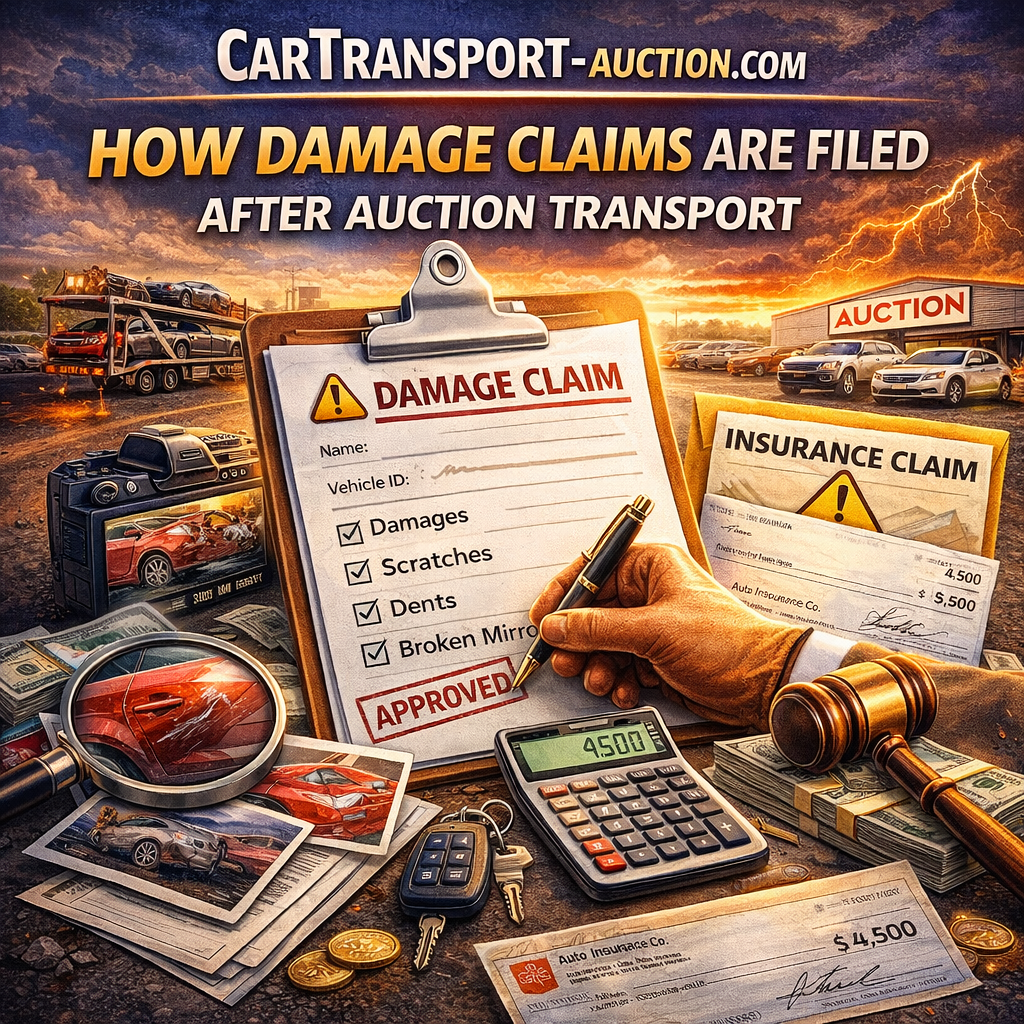
A formal claim usually includes:
- Completed claim form
- Copy of the Bill of Lading
- Photos of the damage
- Repair estimates
Each carrier may have its own process, but the core requirements are similar.
Step 6 Claim Review And Processing
Once submitted, the claim goes through review.
The carrier will:
- Compare pickup and delivery condition
- Evaluate documentation
- Determine liability
This process can take time depending on complexity.
Common Reasons Claims Get Denied
Many claims fail due to avoidable mistakes.
Most common reasons:
- Damage not noted at delivery
- Incomplete documentation
- Late submission
- Pre-existing damage
Understanding these risks improves your chances of success.
How Inspection And BOL Affect Claims
Claims are directly linked to earlier steps in the process.
They depend on:
- Accurate inspection at pickup
- Proper completion of the Bill of Lading
- Careful inspection at delivery
If any of these steps are weak, the claim becomes harder to prove.
How To Increase Your Chances Of Approval
Best practices:
- Always inspect at delivery
- Never sign without checking the vehicle
- Take photos immediately
- Keep all documents
- Act quickly after discovering damage
Consistency and accuracy are key.
Final Thoughts
Filing a damage claim after auction transport is not complicated, but it requires attention to detail.
Success depends on:
timing, documentation, and proper inspection
When you understand how the process works, you can protect yourself, reduce financial risk, and handle transport issues with confidence.