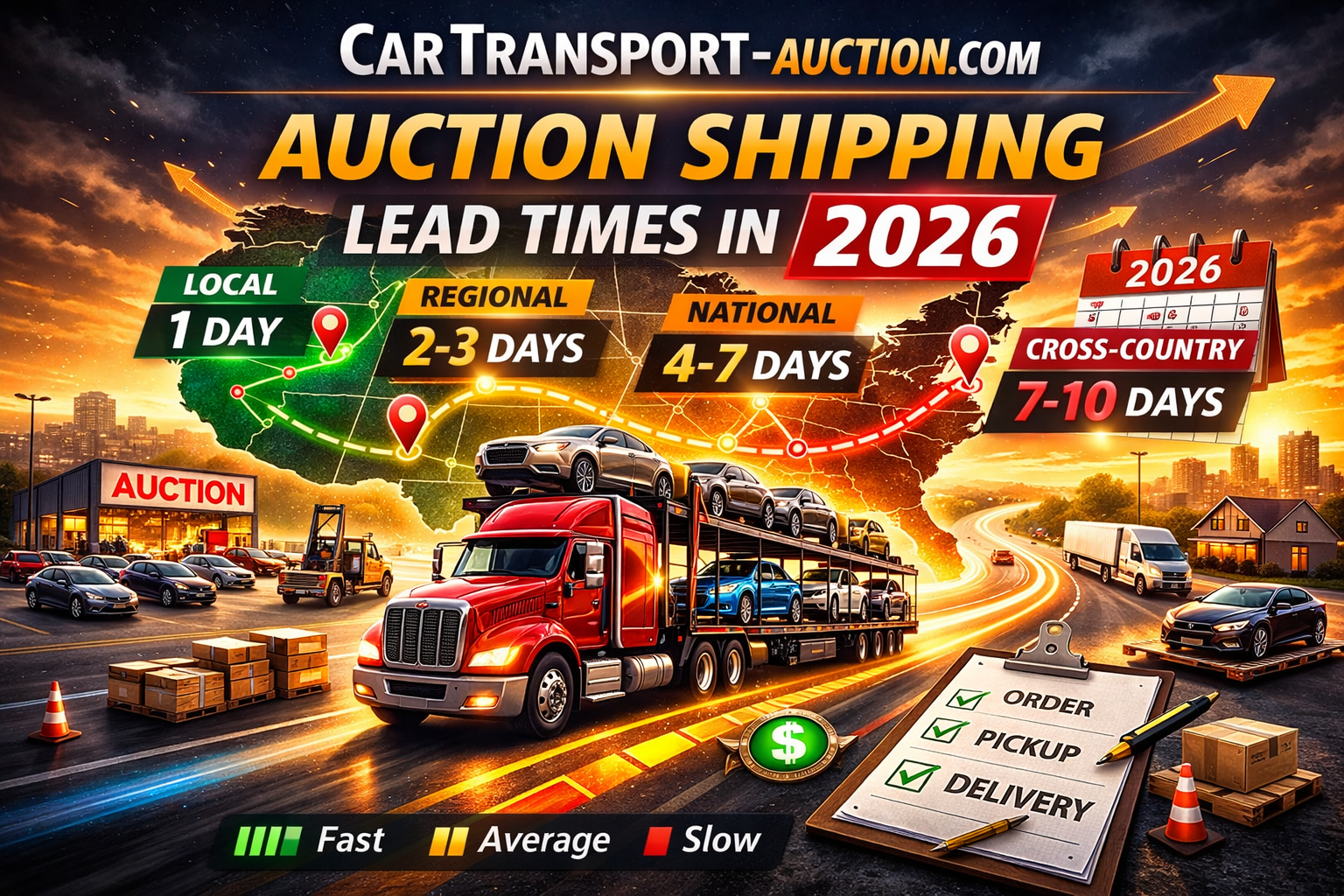
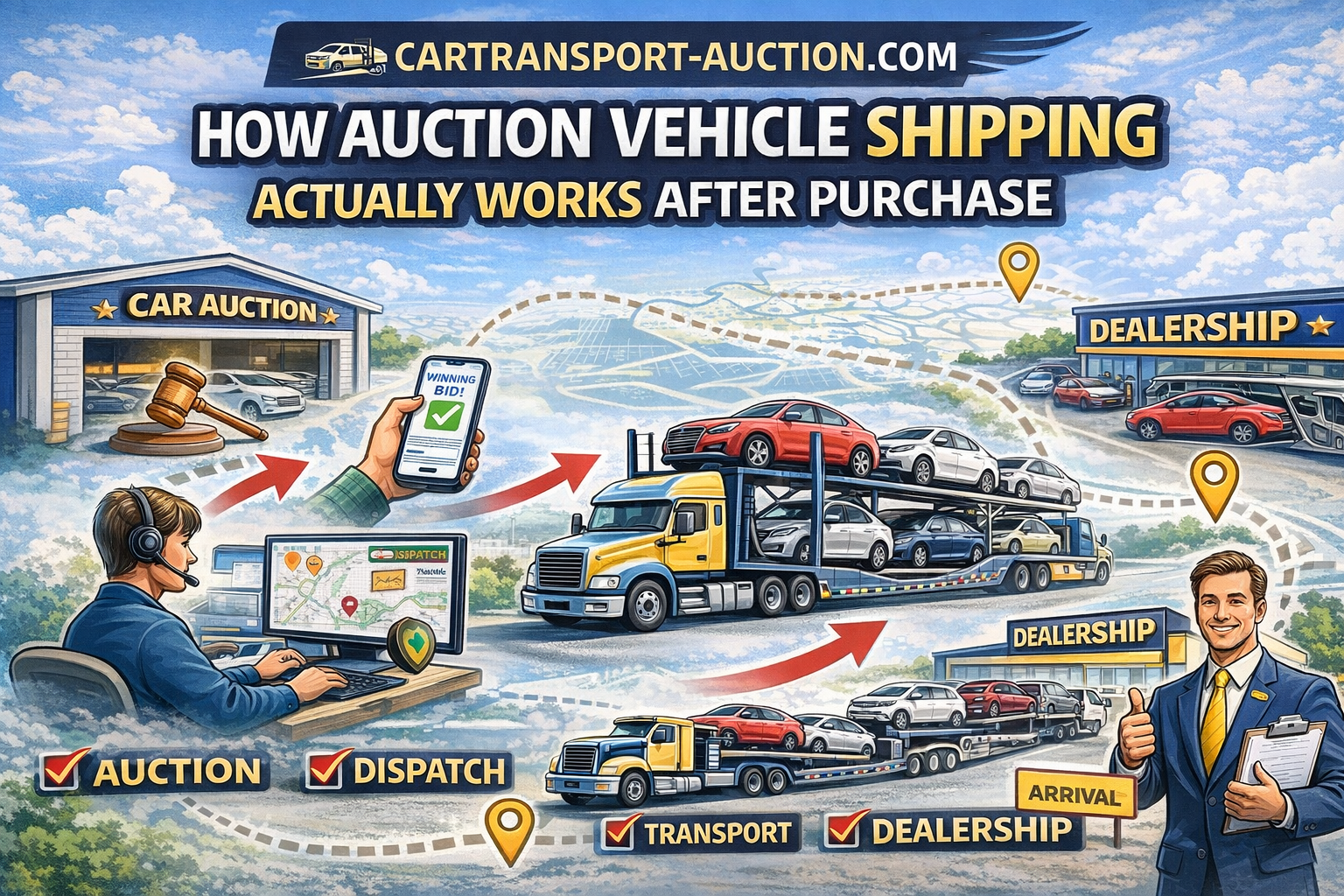
Buying a vehicle at auction is only the first step – what happens next is where many new buyers get confused. Auction vehicle shipping follows a specific process that involves payment clearance, carrier dispatch, pickup coordination, and delivery logistics.
If you understand how this process actually works, you avoid delays, unexpected fees, and unnecessary stress.
what happens immediately after you win an auction
Once you win a vehicle at auction, the clock starts ticking.
Most auctions (Copart, IAAI, Manheim) require:
- Payment within 1–3 business days
- Title processing after payment confirmation
- Release authorization before pickup
Until the vehicle is officially released, no carrier can legally pick it up.
This is one of the most common mistakes – buyers try to book transport too early.
when shipping can actually begin
Shipping starts only after two things happen:
- The auction confirms payment
- The vehicle is marked as “ready for pickup”
At this stage:
- A transport order can be dispatched
- A carrier can be assigned
- Pickup scheduling begins
Depending on the auction location, this can take 2–5 days after payment.
how carrier dispatch works
Once your vehicle is ready, it enters the dispatch phase.
There are two main ways this happens:
broker-based dispatch
- Most common
- Your order is posted on load boards
- Carriers choose the load
direct carrier assignment
- Used by dealers or high-volume buyers
- Faster but less flexible
The key factor here is price vs speed:
- Lower price → longer wait
- Higher price → faster pickup
pickup process at the auction yard
Auction yards operate differently than regular pickup locations.
Here’s what typically happens:
- Carrier checks in at the gate
- Provides release documents
- Waits in queue (sometimes hours)
- Vehicle is brought from storage
Important:
Some auctions charge:
- Storage fees after a few days
- Loading fees
- Gate processing fees
transit phase – what happens during transport
After pickup, the vehicle enters transit.
Typical timelines:
- 0–500 miles → 1–2 days
- 500–1500 miles → 2–4 days
- 1500+ miles → 4–7 days
Factors affecting delivery:
- Route density
- Weather
- Carrier schedule
- Multi-vehicle loads
Transport is rarely direct – cars are grouped into routes.
delivery and final handoff
Delivery is the final stage, but it still requires attention.
At delivery:
- Vehicle condition is checked
- Bill of Lading (BOL) is signed
- Any damage must be noted immediately
If something is wrong and not documented, claims become very difficult.
common delays in auction shipping
Even when everything is done correctly, delays can happen.
Most common reasons:
- Auction release delays
- Carrier availability
- Incorrect paperwork
- Weather or route changes
New buyers often underestimate how dynamic this process is.
how to avoid problems as a buyer
To keep things smooth:
- Pay as early as possible
- Verify vehicle release status
- Use realistic shipping pricing
- Work with experienced dispatchers
- Track progress but expect variability
Auction shipping is not like standard delivery – it’s a logistics chain.
final thoughts
Auction vehicle shipping may seem complicated at first, but it follows a clear structure:
purchase → payment → release → dispatch → pickup → transit → delivery
Once you understand these stages, the process becomes predictable and manageable.
For dealers and frequent buyers, mastering this flow is essential for controlling costs, reducing delays, and keeping inventory moving.