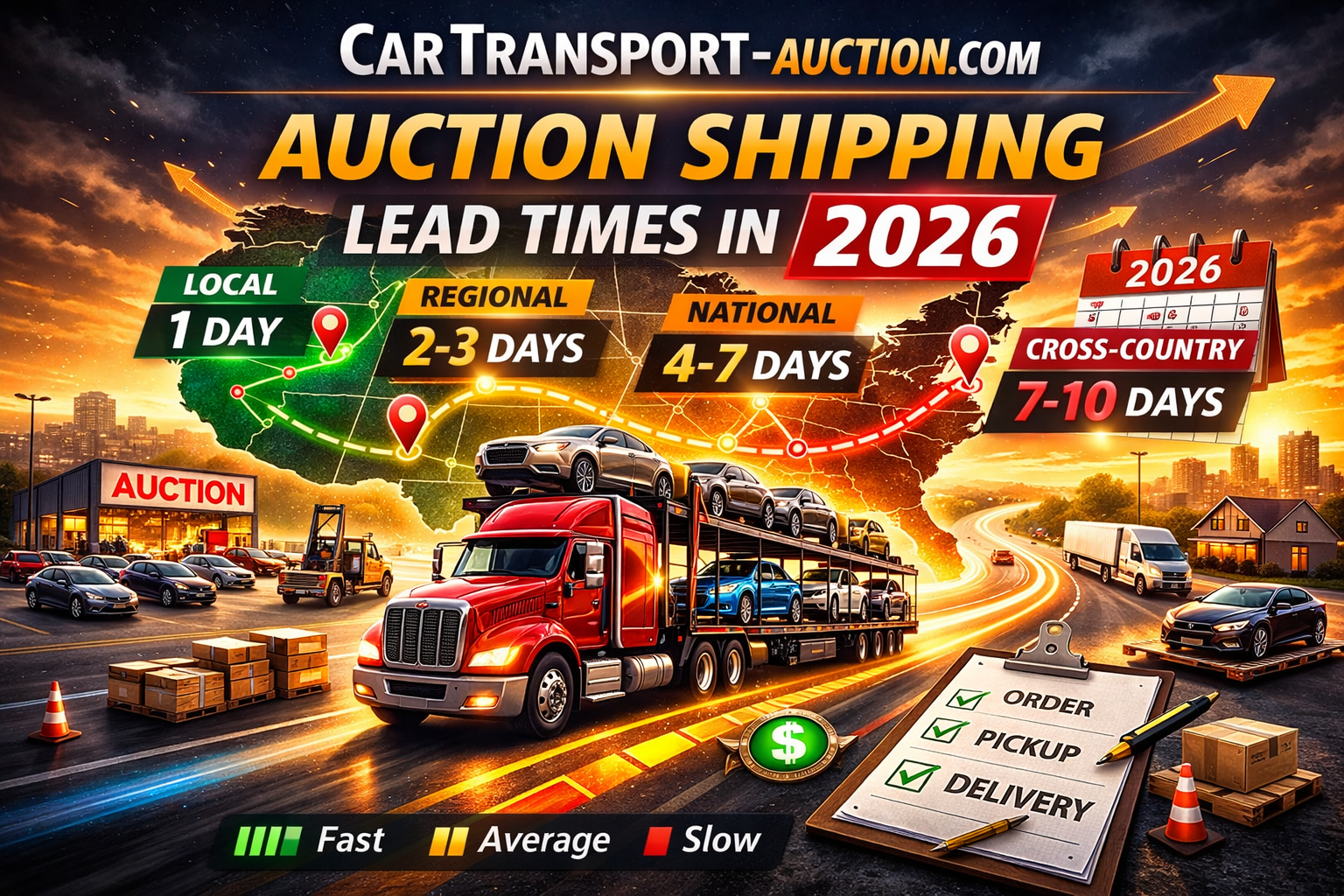

Shipping a car from an auction is not just a flat rate service. The final price depends on multiple variables, and many buyers only realize this after receiving their first invoice.
Understanding the full cost breakdown helps you avoid overpaying and gives you better control over your margins.
Base Transport Cost
The base rate is the foundation of your shipping price.
It is calculated based on:
- Distance
- Route popularity
- Vehicle type
- Market demand
Typical ranges:
- Short distance 300-500 miles – $300 to $700
- Medium distance 500-1500 miles – $700 to $1200
- Long distance 1500+ miles – $1200 to $2000+
This is the number most quotes start with, but it is rarely the final price.
Vehicle Condition And Type
Not all vehicles cost the same to transport.
Factors that increase price:
- Non-running vehicles
- Oversized SUVs or trucks
- Modified or damaged cars
- Luxury or high-value units
For example:
- Non-running fee – +$100 to $300
- Oversized vehicle – +$150 to $400
If the vehicle cannot roll or steer, loading becomes more complex and expensive.
Auction Fees And Yard Charges Auctions have their own fee structure, and many buyers overlook this part.
Common charges:
- Loading fee
- Gate fee
- Storage fee after a grace period
Storage is especially important.
Most auctions allow:
- 2-5 free days
- After that – $20 to $50 per day
Delays in dispatch can quickly increase total cost.
Broker Or Dispatch Fees
If you are working with a broker, there may be an additional layer in pricing.
This can include:
- Service fee
- Dispatch margin
- Priority placement fee
Some brokers include this in the quote, others show it separately.
Understanding this helps compare quotes correctly.
Route And Market Conditions
Shipping cost is highly dependent on supply and demand.
Price goes up when:
- There are fewer carriers in the area
- The route is less popular
- Fuel prices increase
- Seasonal demand rises
For example:
- Shipping from major hubs is cheaper
- Remote auction locations cost more
This is why the same distance can have very different prices.
Timing And Urgency
Speed always affects cost.
If you need faster pickup:
- Higher rate is required
- Carrier priority increases
If you are flexible:
- You can save money
- But wait longer for assignment
This trade-off is one of the key decisions in auction shipping.
Additional And Hidden Costs
This is where many buyers lose money.
Common hidden costs:
- Re-delivery fee if address is inaccessible
- Waiting time at delivery
- Extra stops
- Storage at destination
These are not always included in initial quotes.
Total Realistic Cost Example
Let’s break down a typical scenario:
- Distance – 1200 miles
- Base transport – $950
- Non-running fee – $200
- Auction loading fee – $100
- Storage (2 days delay) – $60
Total:
$1310
This is why understanding every component matters.
How To Reduce Shipping Costs
You cannot control everything, but you can optimize.
Best practices:
- Book transport immediately after payment clears
- Avoid storage fees
- Use realistic pricing to get faster pickup
- Choose common routes when possible
- Work with experienced dispatchers
Many cost issues come from timing, not just pricing.
Final Thoughts
Shipping costs from auctions are dynamic and layered.
It is not just about distance – it is about:
vehicle condition, timing, route, and market conditions
When you understand the full cost breakdown, you can make better decisions and protect your profit on every vehicle.