Before a vehicle leaves the auction yard, one critical step takes place – inspection.
This stage defines the recorded condition of the vehicle and becomes the baseline for the entire transport process. If done correctly, it protects both the buyer and the carrier. If ignored, it can lead to serious problems later.
Why Inspection Is So Important
Inspection is not just a formality.
It determines:
- The documented condition of the vehicle
- Responsibility during transport
- Eligibility for damage claims
Once the vehicle is picked up, any new damage is compared against this initial inspection.
Who Performs The Inspection
In most cases, the inspection is done by the carrier at pickup.
Process includes:
- Locating the vehicle in the auction yard
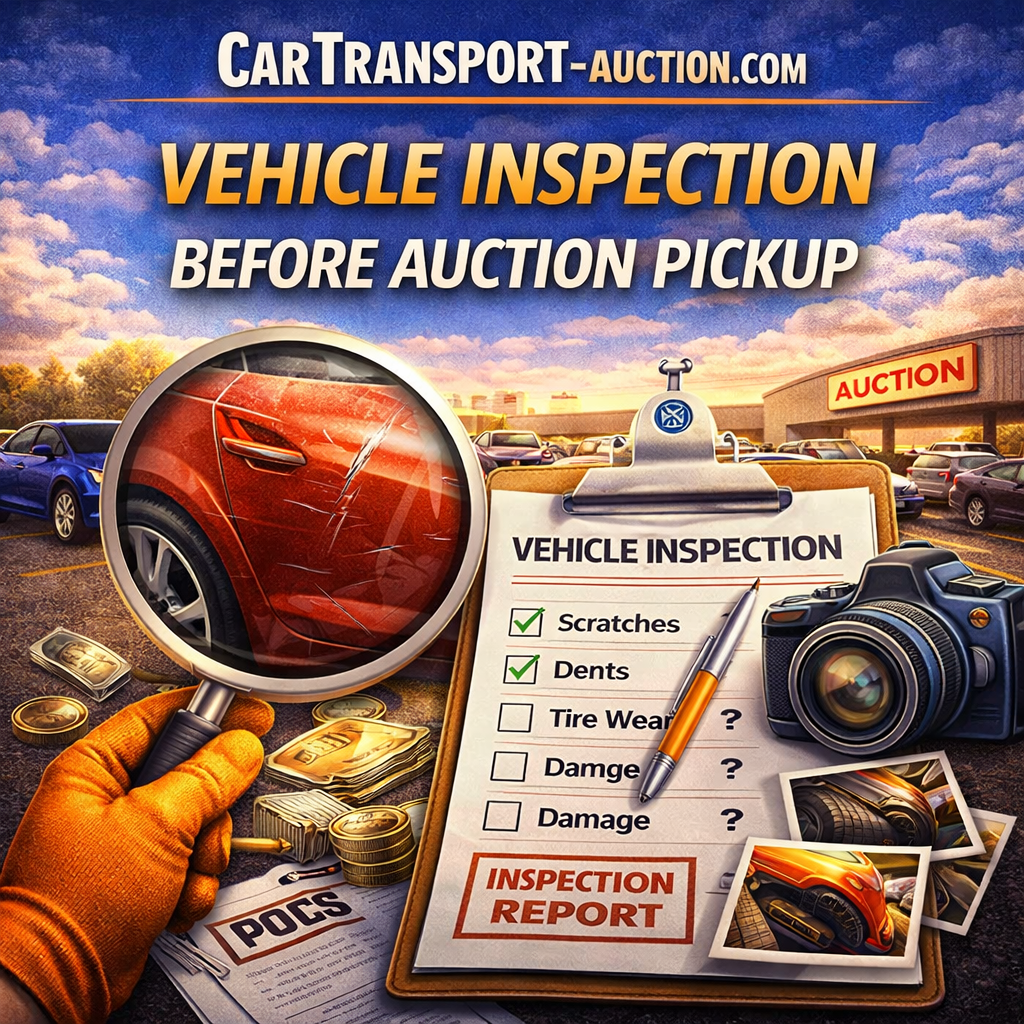
- Visually checking the exterior
- Noting visible damage
- Recording condition on transport documents
Some auctions may provide condition reports, but the carrier still performs their own inspection.
What Is Checked During Inspection
The inspection focuses primarily on visible condition.
Key areas:
- Body panels
- Bumpers
- Glass and mirrors
- Tires and wheels
Common findings include:
- Scratches
- Dents
- Cracks
- Missing parts
The goal is to document everything that is already present.
How Condition Is Documented
Inspection results are recorded in a structured format.
This usually includes:
- Written notes
- Damage codes
- Diagrams of the vehicle
- Sometimes photos
All of this information becomes part of the official transport record.
Connection Between Inspection And BOL
Inspection is directly tied to the Bill of Lading.
At pickup:
- Condition is recorded on the BOL
- The carrier signs the document
At delivery:
- Condition is compared to the original record
- Any differences are noted
Understanding how the BOL works helps clarify why inspection accuracy is critical.
Common Issues During Auction Inspection
Auction environments are not always ideal.
Possible challenges:
- Limited access to the vehicle
- Poor lighting conditions
- Time pressure for carriers
- Large volume of vehicles
Because of this, small damages may sometimes be missed.
Pre-Existing Damage Vs Transport Damage
One of the main purposes of inspection is to separate:
- Damage that already existed
- Damage that occurred during transport
If damage is not recorded at pickup, it is usually assumed to be pre-existing.
This makes accurate inspection essential.
What Buyers Should Be Aware Of
Buyers are not present during pickup, but they should still understand the process.
Important points:
- Do not rely only on auction photos
- Expect minor discrepancies
- Work with reliable carriers
- Review documentation carefully at delivery
Awareness reduces risk.
How Inspection Affects The Entire Shipping Process
Inspection is one of the first physical steps in transport.
It connects:
- Auction condition
- Carrier responsibility
- Delivery verification
It works together with dispatch, transport, and final delivery to create a complete logistics chain.
Best Practices To Avoid Problems
To minimize issues:
- Choose experienced transport providers
- Ensure proper documentation is completed
- Inspect the vehicle again at delivery
- Take your own photos upon arrival
The more documentation you have, the better protected you are.
Final Thoughts
Vehicle inspection before auction pickup is a critical step that defines the entire transport process.
It sets the baseline for condition, supports the BOL, and determines how claims are handled later.
Understanding this stage helps buyers and dealers reduce risk, avoid disputes, and ensure smoother vehicle delivery from auction to destination.