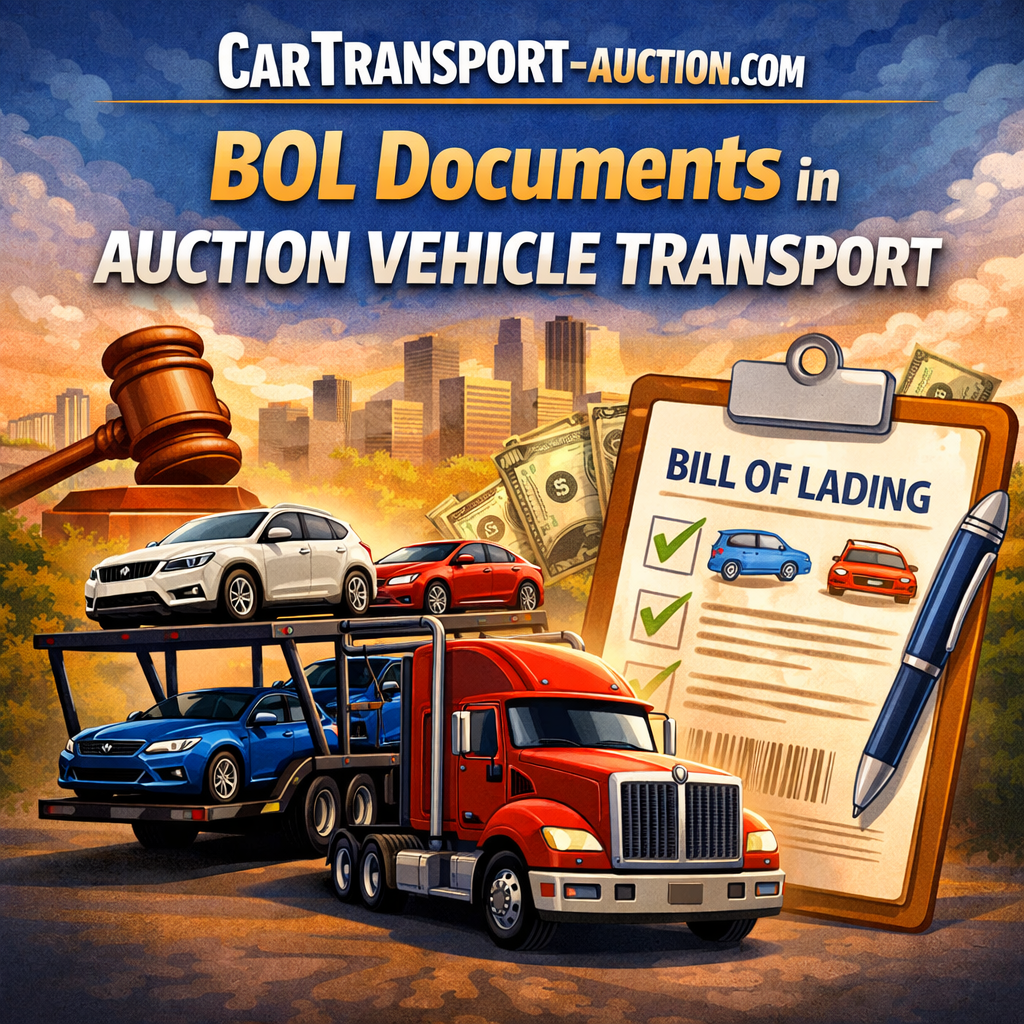
In auction vehicle transport, the Bill of Lading, or BOL, is the most important document in the entire process.
It is not just paperwork – it is a legal record that confirms the condition of the vehicle, the terms of transport, and the transfer of responsibility from pickup to delivery.
If something goes wrong, the BOL is what determines who is responsible.
What Is A BOL In Car Shipping
A Bill of Lading is a document issued at pickup and completed at delivery.
It serves three main purposes:
- Receipt of the vehicle
- Contract of transport
- Record of vehicle condition
Without a properly completed BOL, disputes become extremely difficult to resolve.
When The BOL Is Created
The BOL is generated at the moment of pickup.
At the auction yard:
- The carrier receives release documents
- The vehicle is located and prepared
- An initial inspection is performed
- The BOL is filled out
This is the official start of the transport process.
What Information The BOL Includes
A standard BOL contains detailed information about the shipment.
Key elements:
- Vehicle details (make, model, VIN)
- Pickup and delivery locations
- Carrier information
- Transport type (open or enclosed)
- Condition report
- Signatures at pickup and delivery
The condition section is the most critical part.
Vehicle Condition Report On The BOL
Before loading, the carrier inspects the vehicle and marks its condition.
This includes:
- Scratches
- Dents
- Broken parts
- Missing items
These are recorded using:
- Written notes
- Diagrams
- Sometimes photos
This creates a baseline condition before transport.
The Role Of The BOL At Delivery
At delivery, the BOL is used again.
Process:
- Vehicle is inspected
- Condition is compared to pickup record
- Any new damage is noted
- Both parties sign the document
If damage is not recorded at this stage, it is usually considered pre-existing.
Why The BOL Is Critical For Claims
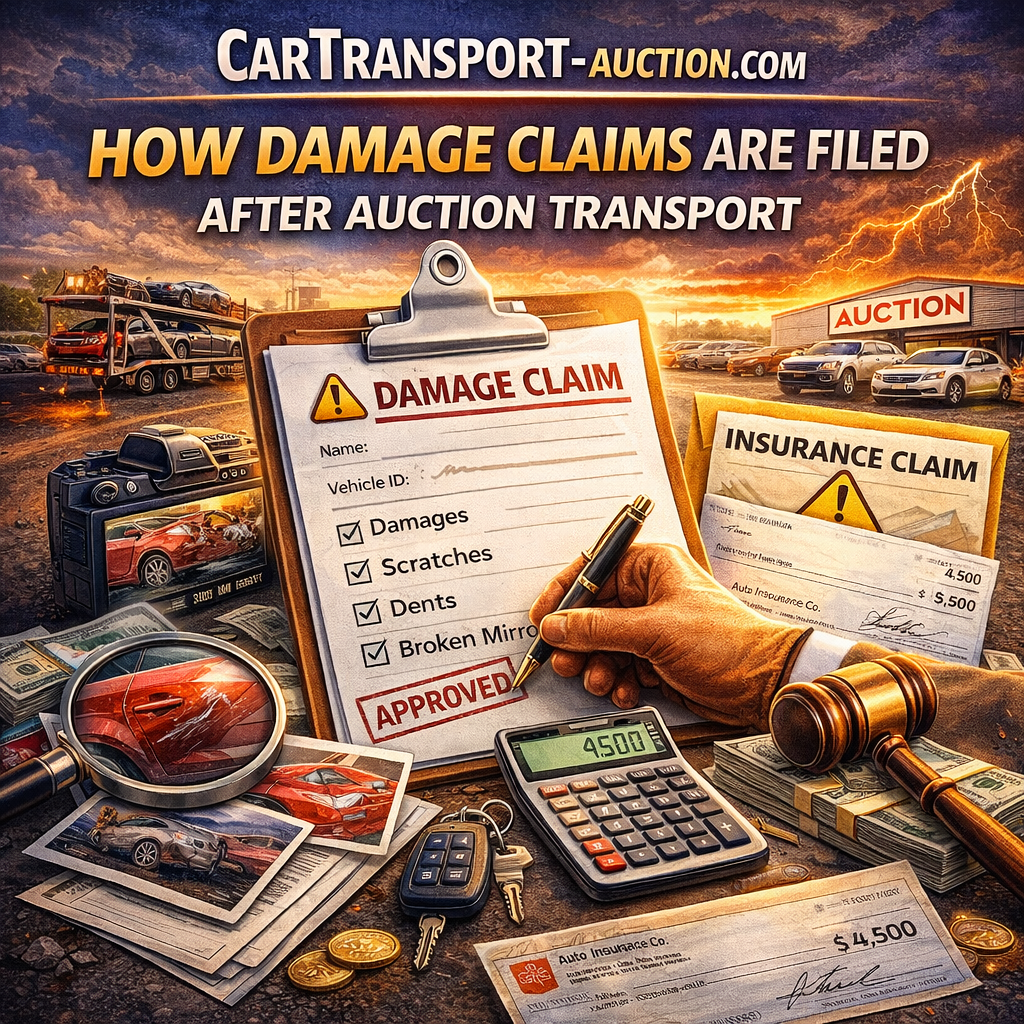
The BOL is the main document used in damage claims.
To file a successful claim:
- Damage must be noted at delivery
- It must not be present on pickup record
- Documentation must be clear
Without this, claims are often denied.
Common Mistakes Buyers Make
Many auction buyers underestimate the importance of the BOL.
Common errors:
- Not checking the vehicle at delivery
- Signing without inspection
- Ignoring small damages
- Not keeping a copy of the BOL
These mistakes can cost hundreds or even thousands of dollars.
Electronic Vs Paper BOL
Today, many carriers use electronic BOL systems.
Advantages:
- Faster processing
- Photo integration
- Digital signatures
- Easier storage
However, the responsibility remains the same – accuracy is critical.
How BOL Connects To The Entire Shipping Process
The BOL is not a separate step – it connects the whole process.
It links:
- Pickup inspection
- Transport responsibility
- Delivery verification
To fully understand how all stages connect, it helps to see the complete flow of auction shipping in practice, from purchase to final delivery.
Best Practices For Buyers And Dealers
To protect yourself:
- Always inspect the vehicle at delivery
- Compare with pickup condition
- Take your own photos
- Never sign blindly
- Keep a copy of the BOL
This is your only real protection in case of issues.
Final Thoughts
The BOL is the backbone of auction vehicle transport.
While it may seem like just another document, it controls:
liability, condition verification, and claims resolution
Understanding how it works is essential for anyone buying vehicles at auction and arranging transport.