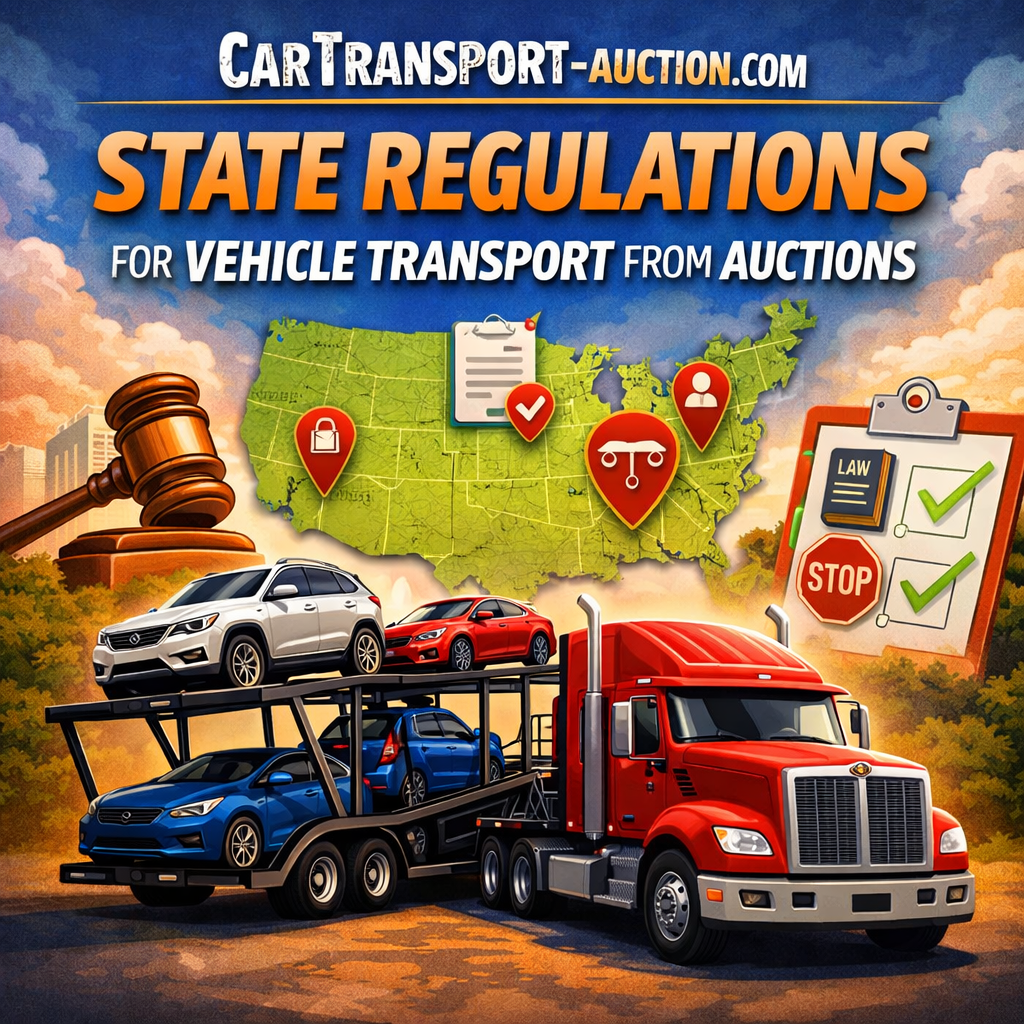
Vehicle transport from auctions in the United States is not just a logistics process – it is also heavily regulated at both federal and state levels.
For auction buyers and small dealers, understanding these regulations helps avoid delays, fines, and unexpected complications during shipping.
Why State Regulations Matter In Auction Shipping
Every transport order crosses multiple jurisdictions.
This means:
- Carriers must comply with federal laws
- State-specific rules also apply
- Certain states have stricter enforcement
Even if your shipment is simple, regulations still influence:
- Carrier availability
- Delivery timelines
- Total cost
Federal Requirements For Car Carriers
Before looking at state differences, there are baseline rules every carrier must follow.
All carriers must have:
- Active USDOT number
- FMCSA registration
- Cargo insurance
- Authority to operate interstate
Without these, a carrier cannot legally transport vehicles.
This is the foundation of the entire system.
State Licensing And Compliance Differences
Some states impose additional requirements beyond federal rules.
Examples include:
- Additional permits for intrastate transport
- Weight and size restrictions
- Local compliance checks
States like California and New York are known for:
- Stricter enforcement
- More inspections
- Higher compliance standards
This can slow down both pickup and delivery.
Auction State Vs Delivery State
Two different states affect your shipment:
Auction location state
- Controls vehicle release procedures
- Sets yard rules and compliance checks
Delivery state
- Affects final delivery process
- May require specific documentation
If both states are strict, delays become more likely.
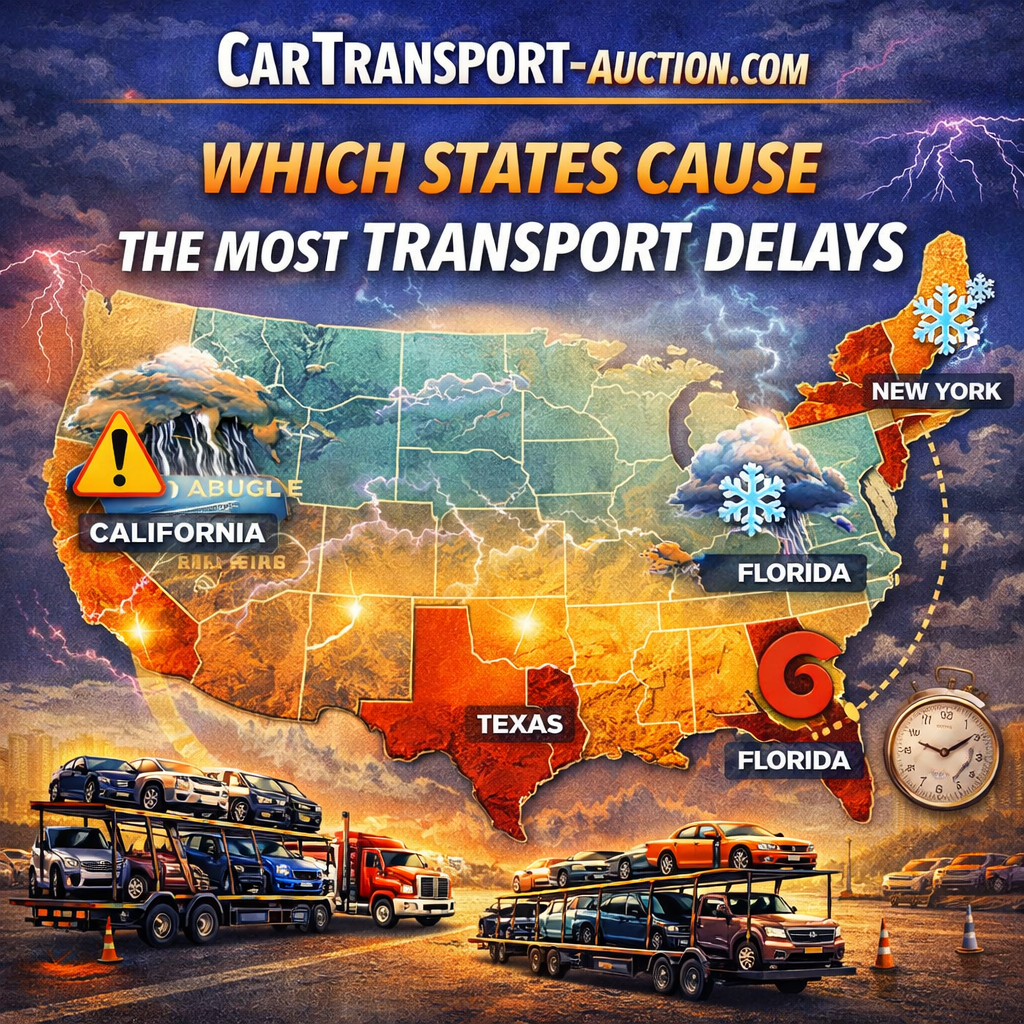
States With More Complex Transport Rules
Some regions consistently create challenges for carriers.
Common examples:
- California – emissions and compliance enforcement
- New York – urban delivery restrictions
- Florida – high demand and congestion
- Texas – long distances and route variability
These states often require more planning and higher pricing.
Local Delivery Restrictions
Even after transport is complete, regulations can affect final delivery.
Common issues:
- Residential access limitations
- City truck restrictions
- Appointment-based delivery zones
In some cities, carriers cannot:
- Enter narrow streets
- Deliver without prior scheduling
This may result in:
- Terminal delivery instead of door-to-door
- Additional fees
Documentation Requirements By State
Documentation is not always identical across states.
Typical required documents:
- Bill of Lading
- Auction release papers
- Title or pending title documents
Some states require stricter verification at delivery.
If documents are incomplete, the vehicle may not be released.
How Regulations Affect Shipping Costs
Regulations indirectly increase cost.
Reasons include:
- Longer waiting times
- Limited carrier availability
- Additional compliance steps
- Higher risk routes
This is why shipping to or from certain states is more expensive.
How To Stay Compliant As A Buyer
You do not need to manage regulations directly, but you should be aware of them.
Best practices:
- Work with licensed carriers or brokers
- Verify carrier credentials
- Prepare documents in advance
- Be flexible with delivery conditions
Small mistakes in compliance can lead to big delays.
Final Thoughts
State regulations are an invisible but critical part of auction vehicle transport.
While the process may seem straightforward, every shipment is influenced by:
federal rules, state laws, and local restrictions
Understanding these factors allows buyers and dealers to plan better, avoid issues, and ensure smoother delivery from auction to destination.