Carrier dispatch is one of the least understood parts of auction vehicle shipping, yet it is the stage that determines how fast your vehicle gets picked up.
After your car is ready for transport, it enters the dispatch system where carriers review and accept loads based on pricing, routes, and availability.
Understanding how this process works helps you avoid delays and unrealistic expectations.
What Is Dispatch In Auction Shipping
Dispatch is the process of assigning your vehicle shipment to a carrier.
It begins after:
- Payment is completed
- Vehicle is released by the auction
- A transport order is created
At this point, your shipment becomes available to carriers.
How Load Boards Work
Most dispatch activity happens through load boards.
These are platforms where:
- Brokers post transport orders
- Carriers browse available loads
- Pricing is visible and competitive
Carriers choose loads based on:
- Route alignment
- Offered price
- Pickup and delivery locations
This creates a marketplace environment.
Why Price Determines Pickup Speed
Pricing is the main driver in dispatch.
If your price is:
- Competitive → faster carrier acceptance
- Too low → longer waiting time
Carriers prioritize loads that maximize efficiency and profit.
This is why low-cost shipping often results in delays.
Carrier Selection Process
Carriers do not accept loads randomly.
They evaluate:
- Route efficiency
- Number of vehicles in the area
- Distance and time
- Pickup conditions
A carrier may skip your load if:
- It does not fit their route
- The price is too low
- The auction location is inconvenient
Dispatch Timing And Delays
Dispatch does not always happen immediately.
Typical timelines:
- Competitive price → 1-2 days
- Average price → 2-4 days
- Low price → 5+ days
Delays are not always a problem, they often reflect pricing strategy.
Auction Factors That Affect Dispatch
Auction locations influence dispatch speed.
Important factors:
- Yard efficiency
- Wait times for loading
- Location popularity
- Volume of available vehicles
Carriers prefer auctions that are:
- Fast to process
- High volume
- Easy to access
Broker Vs Direct Carrier Dispatch
There are two main dispatch models.
Broker-based dispatch
- Most common
- Uses load boards
- Offers flexibility
Direct carrier dispatch
- Used by large dealers
- Faster assignment
- Less flexibility
For most buyers, broker dispatch is the standard approach.
Common Dispatch Mistakes
Many delays come from incorrect expectations.
Common issues:
- Setting unrealistic pricing
- Expecting same-day pickup
- Booking transport before release
- Not understanding market conditions
Dispatch is not instant, it is a matching process.
How To Improve Dispatch Speed
You can influence how fast your vehicle gets picked up.
Best practices:
- Use realistic pricing
- Confirm vehicle release status
- Be flexible with pickup timing
- Work with experienced dispatchers
Small adjustments can significantly reduce waiting time.
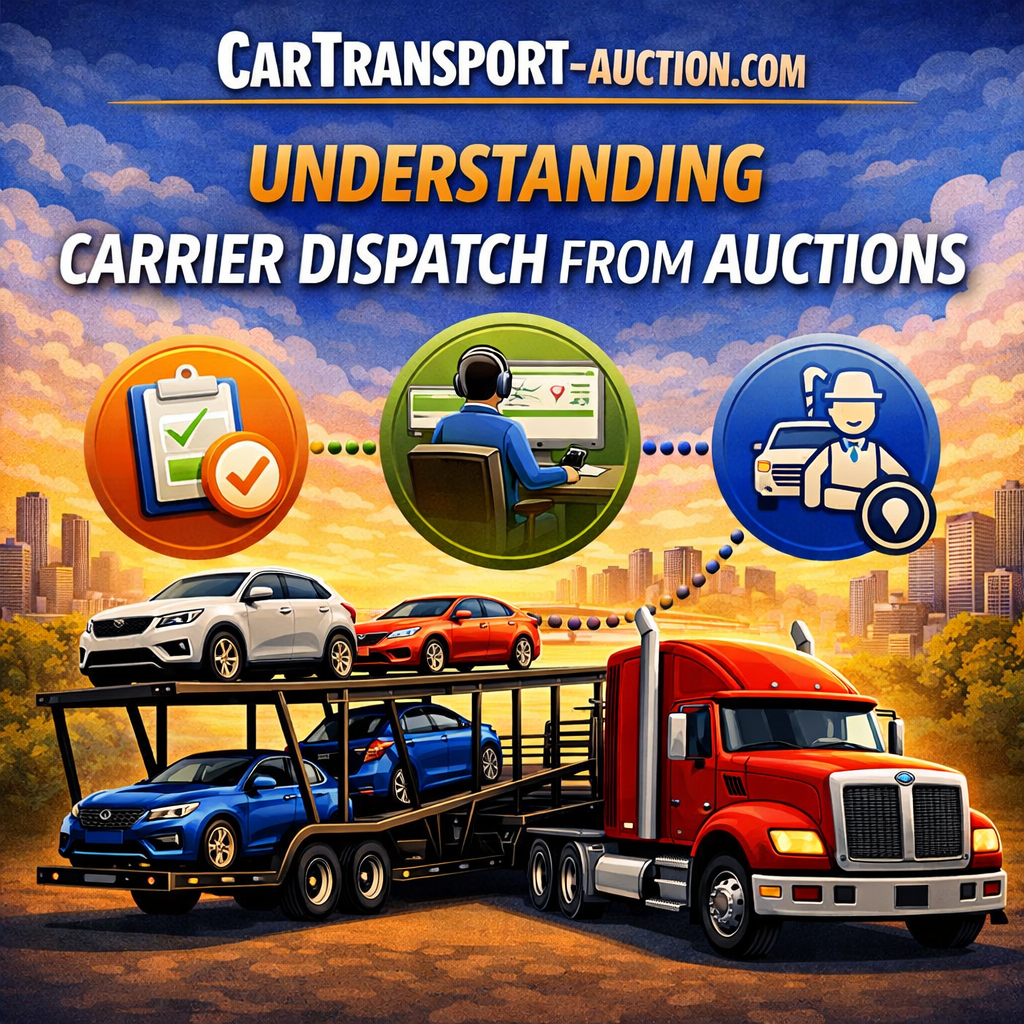
How Dispatch Fits Into The Full Shipping Process
Dispatch is just one stage in a larger system.
It connects:
- Vehicle release
- Carrier assignment
- Pickup scheduling
To understand how all steps work together from purchase to delivery, it helps to look at the full auction shipping process as a whole.
Final Thoughts
Carrier dispatch is a dynamic marketplace where pricing, timing, and logistics intersect.
It is not controlled by a single party, but by the interaction between brokers, carriers, and demand.
Understanding this process allows buyers and dealers to make smarter decisions, reduce delays, and keep vehicles moving efficiently from auction to destination.